

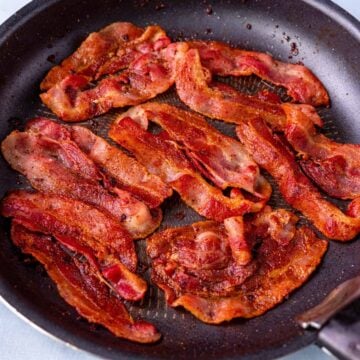
How to cook bacon on the stove using water is a simple way to get evenly browned strips with less splatter. This one-skillet method cooks a full package at once and lets you choose a chewy or crisp finish.
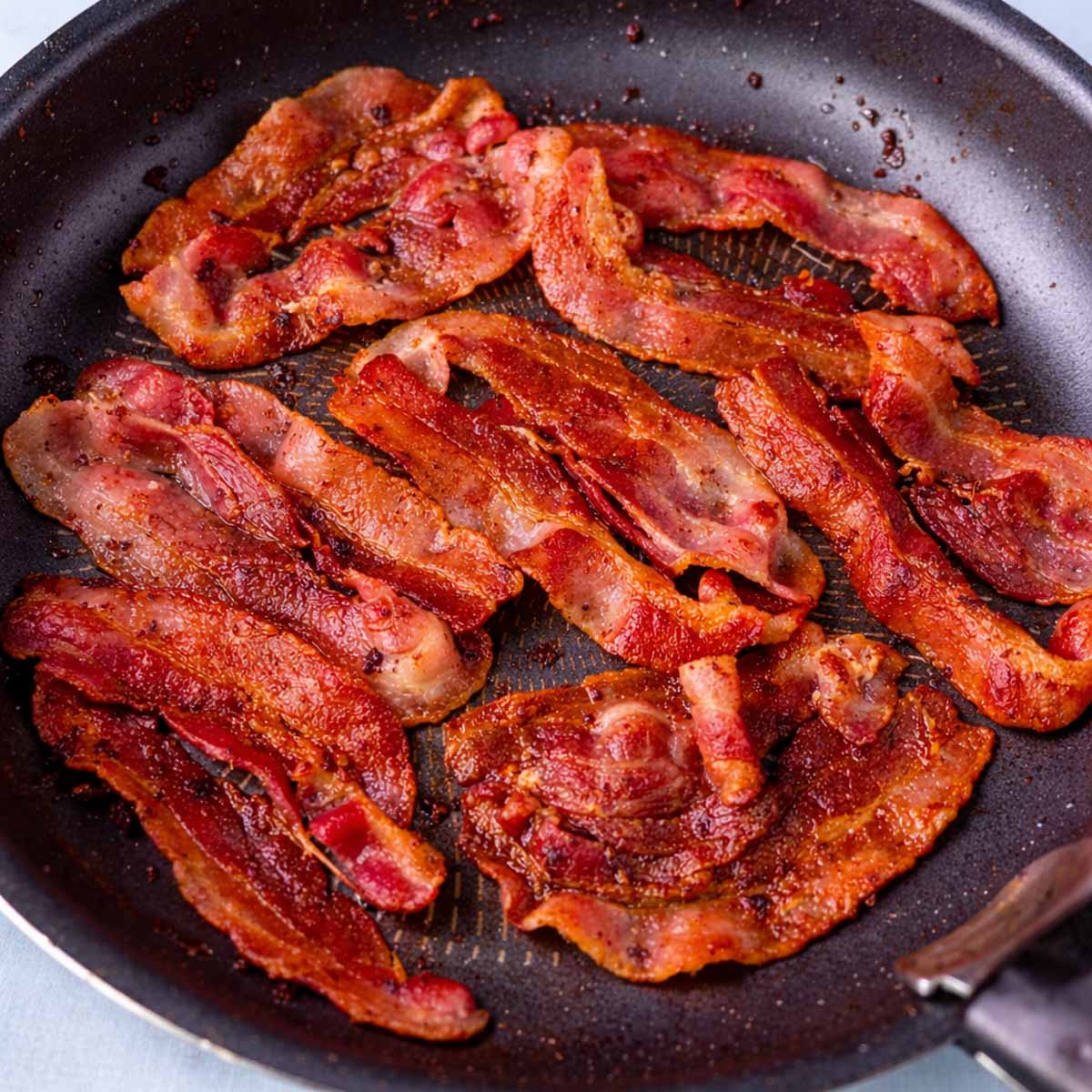
Why You'll Love How to Cook Bacon on Stove
- A full package in one skillet: The two-layer arrangement lets all eight slices cook together.
- Less stovetop splatter: Water controls the initial cooking stage before the bacon begins frying in its rendered fat.
- Your preferred texture: Clear visual cues help you choose between chewy and crisp bacon.
- No added cooking fat: The bacon finishes cooking in the fat it releases naturally.
I especially like this method when preparing a full breakfast because it feels predictable and easy to manage. I can start the bacon, then focus on scrambled eggs while the water simmers. It also works beside over-easy eggs when I want the bacon chewy rather than completely crisp. For a slower weekend breakfast, I serve it with homemade waffles. The method keeps me in control without rushing the final minutes.
I like the balance between browned edges and a tender center, especially when the bacon finishes slowly. The water renders the fat before frying begins, which gives me more control over the final texture. I remove some strips chewy and leave others longer for a crisp finish. That flexibility suits a baked frittata with bacon or breakfast potato hash without changing the basic method.
Best Pan and Heat for Stovetop Bacon
A wide skillet works best, allowing the bacon to spread out and move easily as it cooks. A nonstick pan works well. Medium heat is ideal; high heat causes the bacon to seize and brown unevenly before the fat has time to render.
Avoid overcrowding the pan too tightly. Slight overlap is fine, but the bacon should be able to shift as it cooks.
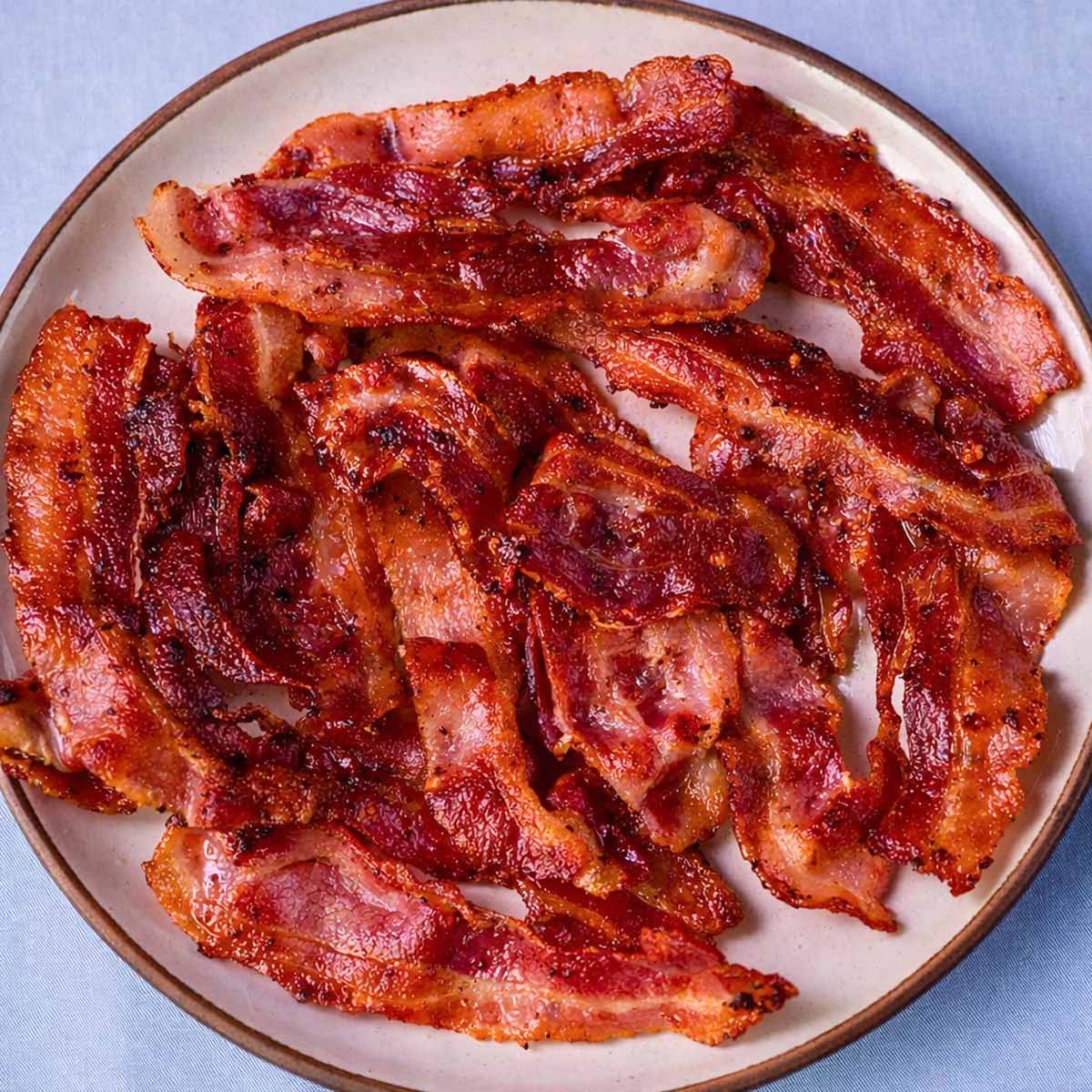
Ingredients in How to Cook Bacon on Stove
These are the only two ingredients I use for this stovetop bacon method.
- Regular-cut bacon: I use regular-cut bacon because it renders evenly within the tested cooking time.
- Water: For me, water makes the first cooking stage easier to control and reduces splatter before frying begins.
How to Cook Bacon on the Stove
You can find the complete printable recipe with measurements below, but for now, here's a quick overview of how it goes:
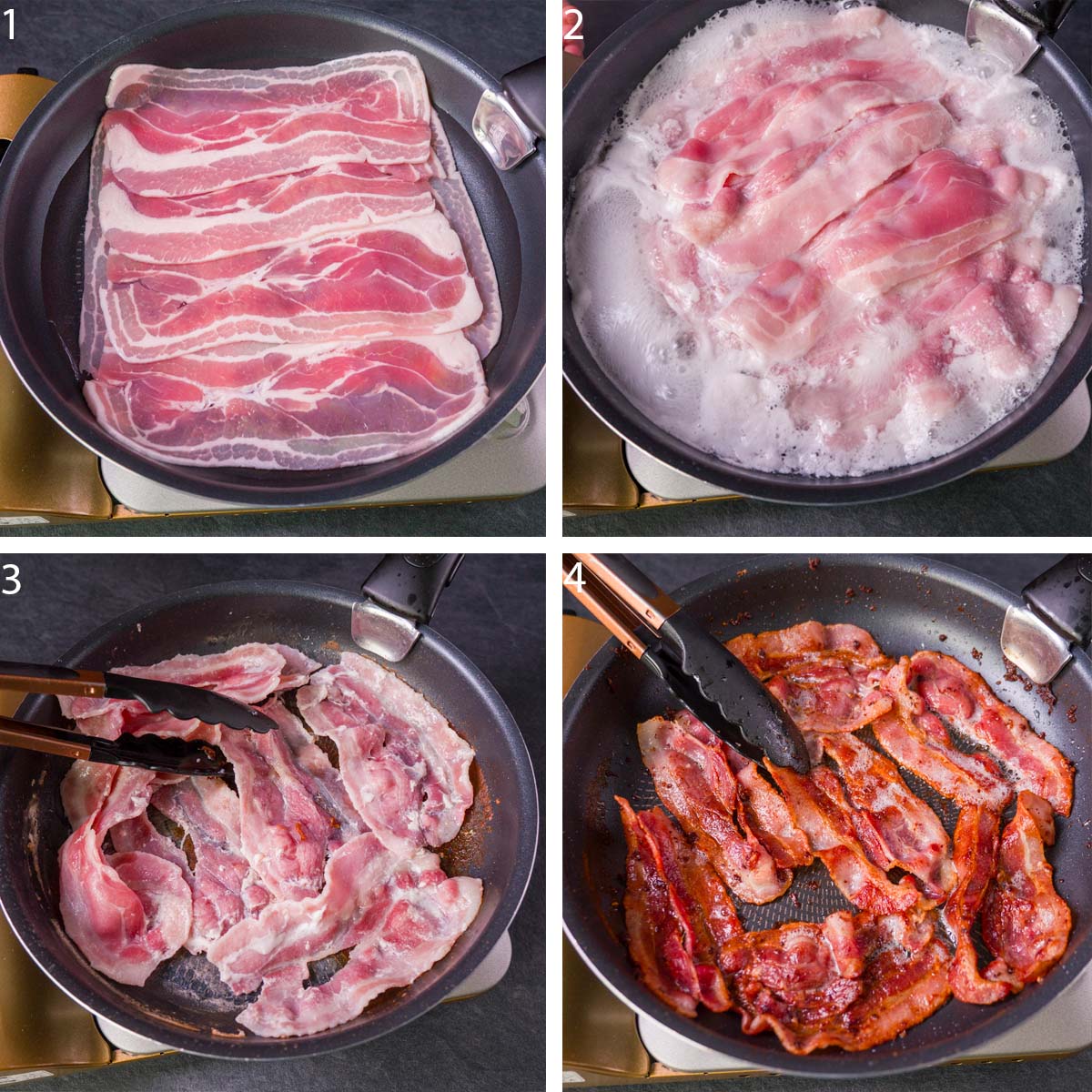
1. Arrange the bacon: Pour the water into a large, cold skillet, then arrange the bacon in two slightly overlapping layers. Place the second layer perpendicular to the first.
2. Simmer the water: Set the skillet over medium heat and bring the water to a gentle simmer. Continue until most evaporates and the bacon looks pale and flexible.
3. Fry in the rendered fat: Once the water evaporates, let the bacon fry in the fat it released. Move the slices gently so raised edges contact the pan.
4. Choose the texture: Remove chewy bacon when the bubbles are small and steady. Cook longer for a deeper color and crisp finish, then drain the slices flat.
How Long to Cook Bacon on the Stove
Regular-cut bacon takes approximately 20-25 minutes with this full-package water method. Most of that time is spent simmering away the water and rendering the fat.
- For chewy bacon: Remove the slices when the bubbles are small and steady.
- For crisp bacon: Continue cooking until the bubbling becomes more active and the color deepens.
Thick-Cut Bacon plan for an extra 10-15 minutes after the water evaporates
Watch the pan closely during the final minutes. Bacon can change from chewy to crisp quickly after the water evaporates.
Tips for Cooking Bacon on the Stove
- Reposition the slices: Move raised or folded edges after the water evaporates so they contact the pan and brown evenly.
- Follow the bubbles: Bubble activity provides a more useful texture cue than relying only on the clock.
- Make room near the end: Create extra space as slices finish so the remaining bacon fries instead of steaming.
Storage and Reheating
Cooked bacon keeps well in the fridge for up to 4 days. Reheat gently in a skillet over low heat or briefly in the oven to restore crispness without drying it out.
What to Serve with Bacon
I like serving stovetop bacon beside a Spanish omelette or zucchini frittata for a filling breakfast. It also pairs well with scrambled eggs with tomatoes when I want something lighter and fresh-tasting.




Try These Bacon Recipes Next!
Get my new cookbook!
Get your copy of the book with easy, fresh, and tried-and-true Mediterranean Recipes from the Author and founder of Vargasavour Recipes, Estefania.
Recipe
How to Cook Bacon on the Stove
Ingredients
- 450 g regular-cut bacon - 1 standard package
- 240 ml water
Instructions
- Pour 240 ml water into a large, cold skillet. Add the water before turning on the heat; never add water after the bacon begins frying in hot rendered fat.
- Arrange 450 g regular-cut bacon in two slightly overlapping layers, placing the second layer perpendicular to the first.
- Set the skillet over medium heat and bring the water to a gentle simmer. Cook for 15-20 minutes, until most of the water evaporates, the fat renders, and the bacon looks pale and flexible.
- Once the water evaporates, let the bacon fry in its rendered fat. Gently move the slices so raised edges contact the pan and brown evenly.
- For chewy bacon, remove the slices when the bubbles are small and steady. For crisp bacon, continue cooking until the bubbling becomes more active and the color deepens. Remove individual slices as they reach your preferred texture.
- Transfer the bacon to a paper towel-lined plate and arrange the slices flat. Let them rest briefly; they will firm and become crisper as they cool.
Notes
Nutrition
Nutritional information is based on third-party calculations and should be considered an estimate only. Actual nutritional content will vary based upon brands used, measuring methods, cooking method, portion sizes, and more.


Maureen says
I try this method and the bacon cooks so evenly. The strips turn golden, crisp, and not burnt on the edges. This is now the way I would cook bacon on the stove every time.