

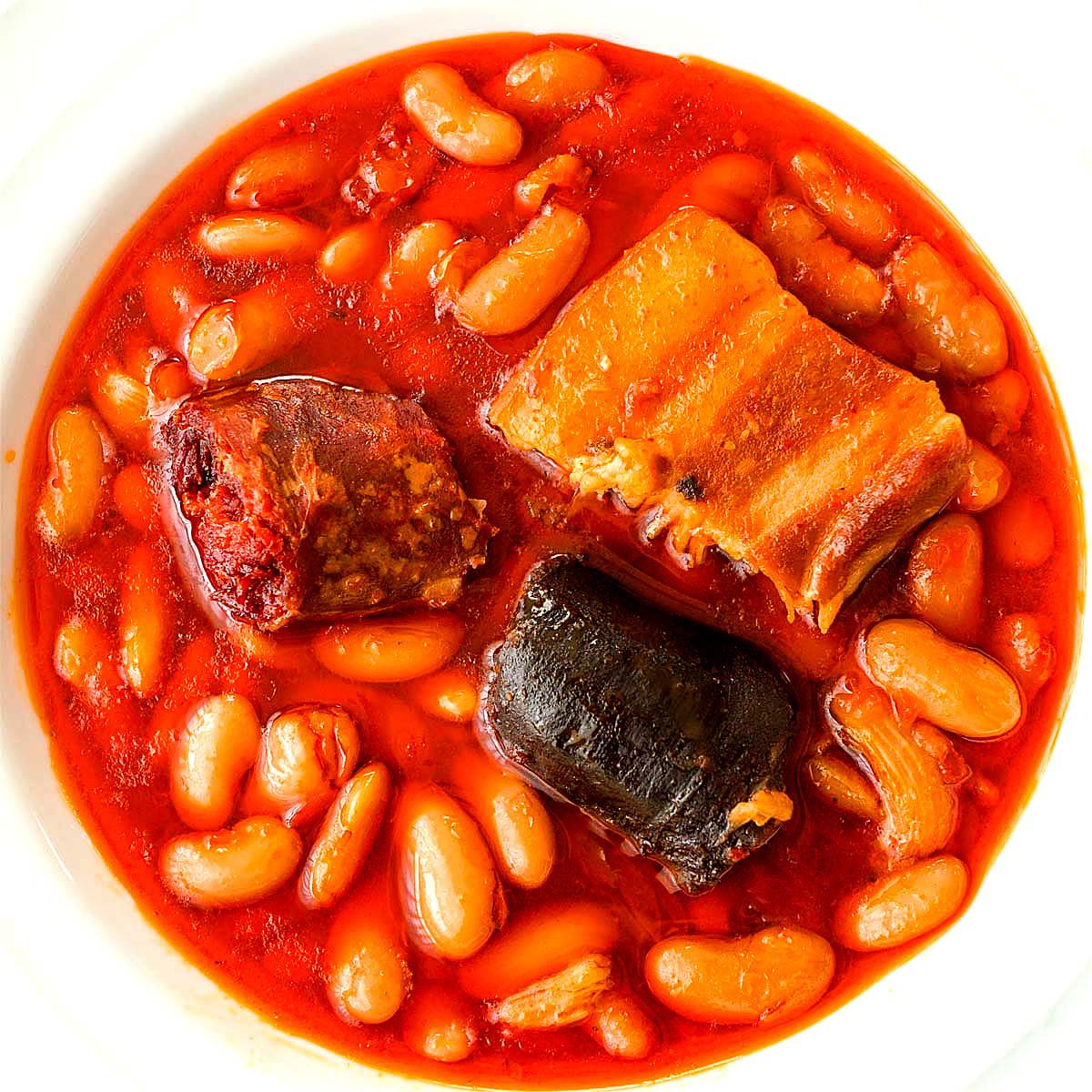
This Fabada Asturiana recipe is a slow-cooked Spanish white bean stew from Asturias, made with pork belly, chorizo, and morcilla. The beans soak overnight, then simmer gently while the meats build a rich broth with saffron and smoked paprika.
What Makes this Traditional Fabada Asturiana Special
- Traditional Asturian method: Dried beans simmer slowly with the meats, onion, garlic, saffron, and smoked paprika.
- Tender beans that stay whole: Cold-water additions and gentle shaking help protect the softened beans.
- Deep flavour from the compango: Fresh pork belly, cured chorizo, and morcilla season the broth as they cook.
- Suitable for making ahead: The finished stew keeps for two to three days in the refrigerator.
I have travelled to Asturias many times, where my friends' parents taught me to make fabada in the traditional way. Their method began with soaked beans and kept the meats whole during the long simmer. That respect for slow cooking also shapes my Spanish lentil stew, although fabada has its own distinctive character. I still follow their technique, including adding cold water and waiting before adding the morcilla. It is the version I return to whenever I want the deep flavours I remember from Asturias.
The chorizo and smoked paprika give the broth warmth, while the morcilla adds a deeper savoury flavour. The beans become tender and creamy inside, but gentle handling helps their skins remain intact. Unlike my Spanish white bean soup with clams, this fabada gains its richness from pork and cured sausages. I shake the pot instead of stirring because a spoon can break the softened beans. Adding the morcilla last keeps it intact while its flavour settles into the finished stew.

Key Ingredients for Fabada Asturiana
You'll find the exact measurements in the recipe card, but here's a closer look at a few of the ingredients and why I use them.
- White beans: I start with dried fabes when available because they become creamy while holding their shape. Cannellini or Great Northern beans are practical alternatives.
- Pork belly, chorizo, and morcilla: For me, this combination gives the broth its characteristic savoury depth. I use fresh pork belly, Spanish cured chorizo, and Asturian morcilla.
- Onion and garlic: I add one medium onion in quarters and keep the garlic whole. They flavour my broth without changing the stew's texture.
- Saffron and smoked paprika: I use both to bring warm colour and a gently smoky flavour to the finished fabada.
How to Make Fabada Asturiana
You can find the complete printable recipe with measurements below, but for now, here's a quick overview of how it goes:
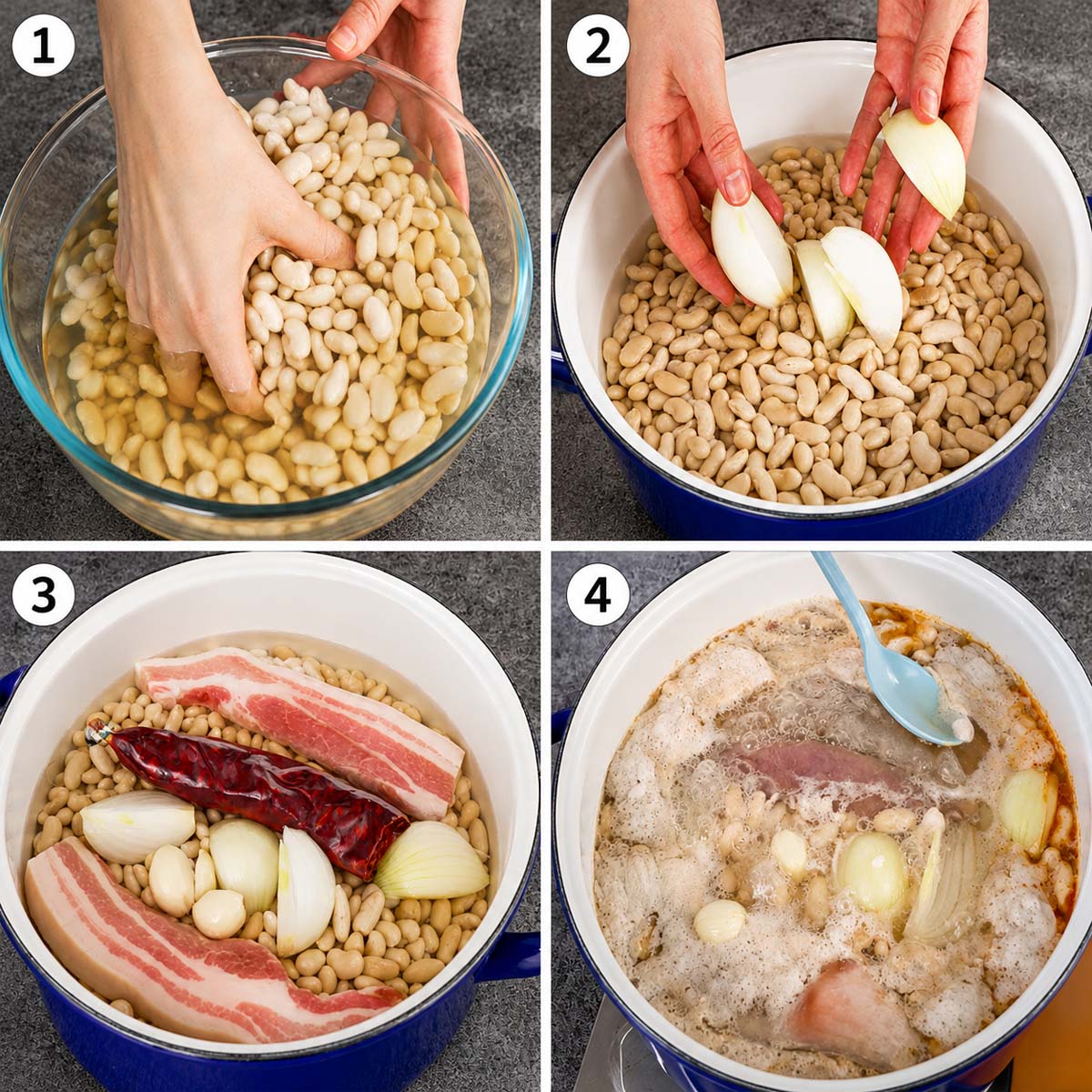
1. Soak white beans in plenty of water overnight, then drain and rinse well.
2. Place the soaked white beans in a large pot, cover with cold water, and add diced onion.
3. Toss the garlic, pork belly, and chorizo into the pot. Bring the mixture to a boil over medium-high heat.
4. Simmer for 30 minutes, skim off any impurities, and deglaze for a few minutes.
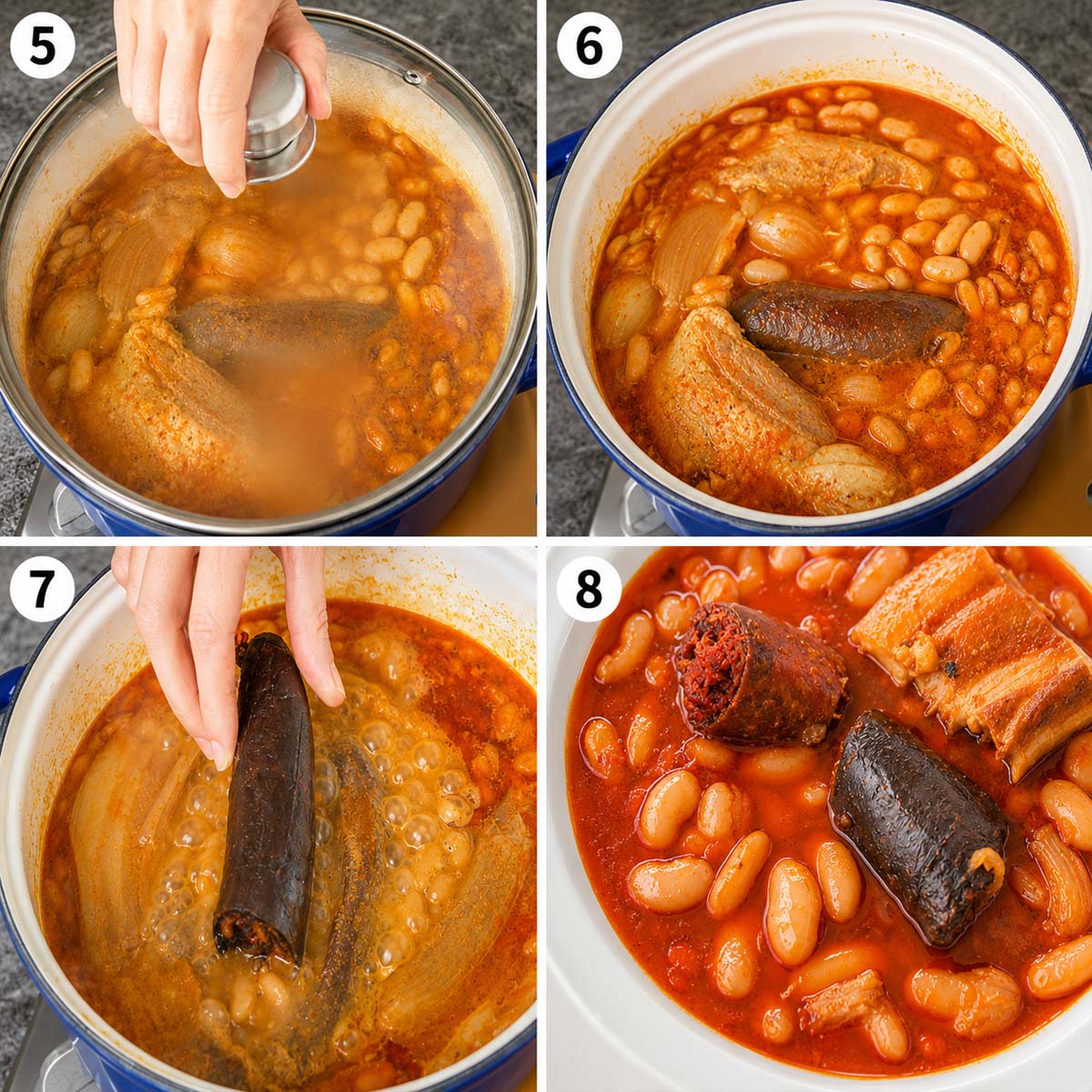
5. Cook on medium-high heat for 30 minutes, then simmer and add cold water, extra virgin olive oil, saffron, paprika, and salt. Cover and cook for 2 hours until tender.
6. Occasionally, shift the beans around. Introduce cold water twice to "startle" them (interrupt the boiling to ensure perfect cooking).
7. Add the morcilla (Spanish black pudding) and cook for 30 minutes. Slice the chorizo, morcilla, and pork belly, then cook briefly to blend the flavors.
8. Once everything is thoroughly cooked and the flavors have blended, your fabada asturiana is ready to be served.

Helpful Swaps
- White beans: If Asturian fabes are unavailable, use dried cannellini or Great Northern beans.
My Tips for Fabada Asturiana
- Use a wide pot: It gives the beans and meats enough room to cook in an even layer.
- Control the simmer: Once the initial boil is complete, keep the heat gentle to help the beans remain intact.
- Check the seasoning late: Taste before adding extra salt because the cured sausages also season the broth.
Storage
I keep leftover fabada, including the beans and broth, in an airtight container in the refrigerator for two to three days. For longer storage, I freeze it for no more than one month.
What to Serve with Fabada Asturiana
I serve fabada with homemade ciabatta for the broth. When I want something fresh alongside, I add my Spanish tuna salad with tomatoes.
Try These Spanish Recipes Next!


Get my new cookbook!
Get your copy of the book with easy, fresh, and tried-and-true Mediterranean Recipes from the Author and founder of Vargasavour Recipes, Estefania.
Recipe

Fabada Asturiana (Spanish White Bean Stew)
Ingredients
- 400 g dried white beans - such as fabes, cannellini beans, or great northern beans
- 1 medium onion - quartered
- 3 cloves garlic - whole
- 250 g fresh pork belly
- 100 g Spanish cured chorizo
- 100 g Asturian morcilla (blood sausage)
- 2 tablespoons extra-virgin olive oil
- ½ teaspoon saffron threads
- 1 tablespoon smoked paprika
- 1½ teaspoon salt
- 3 l water
Instructions
- Place 400 g dried white beans in a large bowl, cover with plenty of water, and soak for 8 hours or overnight.
- Drain and rinse the beans. Transfer them to a wide pot and add the 1 medium onion quartered, 3 cloves garlic , 250 g fresh pork belly, and 100 g Spanish cured chorizo . Add 3 l water cold water to submerge everything fully.
- Bring the pot to a boil over medium-high heat. Boil for 30 minutes, skimming away the foam and excess fat that rise to the surface.
- Reduce the heat to a gentle simmer. Add 2 tablespoons extra-virgin olive oil, ½ tsp saffron threads, 1 tablespoon smoked paprika, and 1½ teaspoon salt. Cover and simmer for 2 hours.
- Gently shake the pot occasionally instead of stirring. During the 2-hour simmer, add two splashes of ¼ l water at separate intervals and keep the beans submerged.
- Add 100 g Asturian morcilla (blood sausage) and simmer for 30 minutes more, or until the beans are tender. Cut the pork belly, chorizo, and morcilla into serving pieces with kitchen scissors directly in the pot. Alternatively, transfer the meats to a cutting board, slice them, and return them to the fabada before serving.
Notes
Nutrition
Nutritional information is based on third-party calculations and should be considered an estimate only. Actual nutritional content will vary based upon brands used, measuring methods, cooking method, portion sizes, and more.


John says
I've always wanted to try Fabada Asturiana. The beans and sausage combo sounds absolutely delicious!