

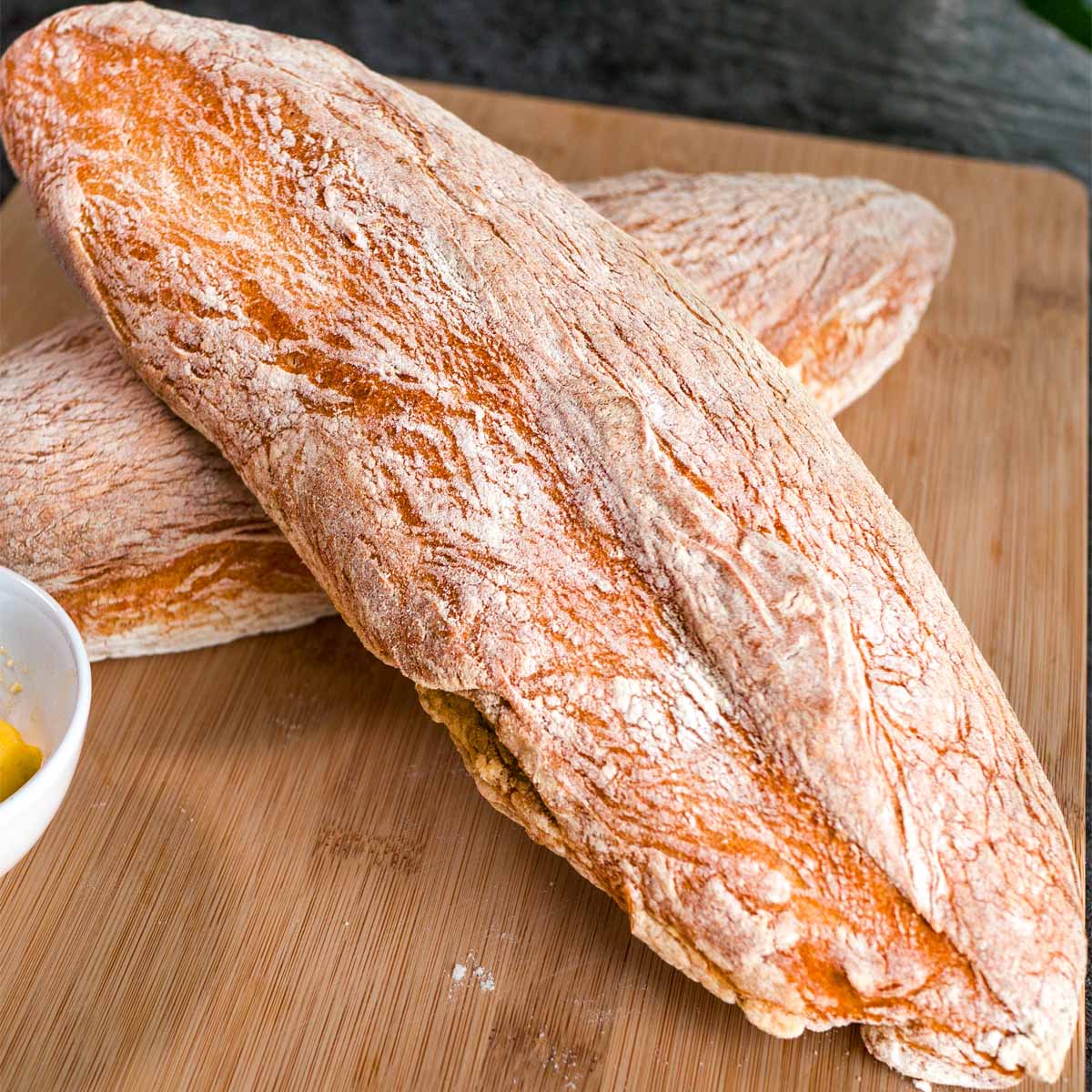
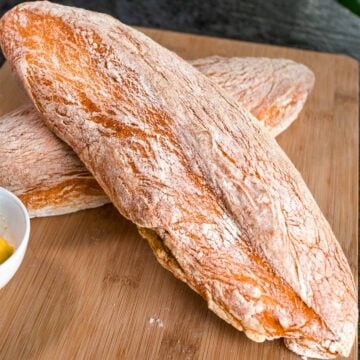
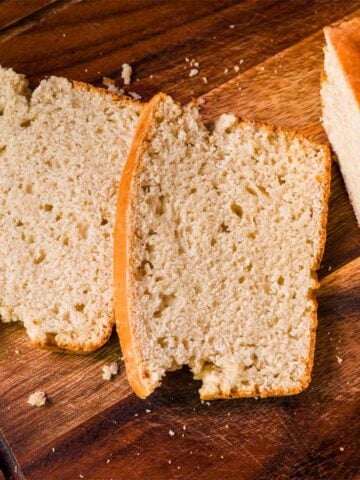
This easy homemade ciabatta bread uses a sticky, high-hydration dough to create two loaves with a crisp crust and soft, airy crumb. The same-day method needs only a bowl and spatula, so there is no stand mixer or overnight starter to prepare.
Why You'll Love This Homemade Ciabatta Bread
- No Stand Mixer Needed: A spatula develops the dough directly in the mixing bowl.
- Made in One Day: The dough rises and bakes without requiring an overnight starter.
- Contrasting Textures: The high-hydration dough creates an airy interior beneath the golden crust.
- Useful in Different Meals: Slice the loaves for sandwiches, bruschetta, or dipping into soups and sauces.
I never get tired of making this bread because each stage gives me something to look forward to, from seeing the sticky dough expand to hearing the crust crackle as the loaves cool. Cutting into the first loaf and revealing the airy center is always the most satisfying part. I can use the slices to make my grilled spicy chicken sandwich, but the bread also feels complete with a much simpler topping. When I want something lighter, I toast it and use it as the base for my tomato bruschetta with mozzarella.
What I enjoy most is the contrast between the crisp, flour-dusted crust and the soft interior filled with irregular holes. The bread has a simple savory flavor that works with toppings without competing with them. Working the sticky dough with a spatula develops its structure, while the long rise creates the air pockets that give ciabatta its open crumb. Gentle shaping protects those bubbles, and steam helps the outside become crisp. The finished loaf is especially useful beside my Spanish garlic soup, while bread that is no longer at its freshest can be turned into garlic toast.

Key Ingredients for Homemade Ciabatta Bread
The ingredients are simple, but each one contributes to the structure, rise, or flavor of the finished bread.
- Bread Flour: I use bread flour because its higher protein content helps the sticky dough develop enough strength to support an airy crumb.
- Warm Water and Instant Yeast: I combine the instant yeast with warm water so it disperses evenly before the remaining ingredients enter the bowl.
- Sugar and Salt: For me, the small amount of sugar supports the yeast and browning, while the salt balances the flavor and controls the fermentation.
- Extra-Virgin Olive Oil: I use the oil to coat the bowls and dough portions, helping the sticky dough release more easily after rising.
How to Make Homemade Ciabatta Bread
The complete printable recipe appears below, but these four stages provide an overview of the method.

1. Mix the Sticky Dough: Combine the warm water and instant yeast, then add all the bread flour and sugar. Mix in the salt until a sticky dough forms.
2. Develop and Rise the Dough: Work the dough with a spatula until smooth and elastic. Divide it between two oiled bowls, cover, and leave it in a warm place until doubled.
3. Shape the Loaves: Turn the risen portions onto a generously floured surface. Shape them gently into long loaves, transfer them to the prepared baking sheet, and leave them for their second rise.
4. Bake and Cool: Bake at 450°F / 230°C, then reduce the oven to 390°F / 200°C to finish. Transfer the golden loaves to a wire rack and cool completely before slicing.

Tips for Homemade Ciabatta Bread
Follow the Dough Rather Than Only the Clock: I move to the next stage when the dough has doubled, even if the rise takes slightly longer in a cooler kitchen.
Prepare the Baking Sheet in Advance: Having the parchment and flour ready means I can transfer the risen dough without leaving it on the work surface unnecessarily.
Divide the Dough Evenly: I make the two portions as similar as possible so the loaves rise and bake at approximately the same rate.

Storage
Once the ciabatta has cooled completely, I wrap it in a clean kitchen towel and keep it at room temperature for up to two days. If I have extra bread, I freeze it and warm it again when needed.
What to Serve With Homemade Ciabatta Bread
I like serving ciabatta with olive oil and balsamic vinegar for dipping or alongside a bowl of butternut squash soup. Its airy crumb is also useful for absorbing the sauce from my creamy ground turkey pasta.
Try These Bread Recipes Next!


Get my new cookbook!
Get your copy of the book with easy, fresh, and tried-and-true Mediterranean Recipes from the Author and founder of Vargasavour Recipes, Estefania.
Recipe
Easy Homemade Ciabatta Bread
Ingredients
- 380 ml warm water
- 7 g instant yeast
- 500 g bread flour
- 1 teaspoon granulated sugar
- 2 teaspoons salt
- 2 tablespoons extra virgin olive oil - divided
- Additional bread flour - for dusting
Instructions
- Pour 380 ml warm water into a large mixing bowl. Add 7 g instant yeast and stir until dissolved. Add 500 g bread flour and 1 teaspoon granulated sugar, then mix until combined. Sprinkle in 2 teaspoons salt and continue stirring until a sticky dough forms.
- Work the dough firmly with a spatula for about 10 minutes, until it becomes smooth and elastic.
- Use some of the 2 tablespoons extra virgin olive oil to lightly coat two bowls. Divide the dough evenly between them and drizzle the remaining oil over the portions. Cover with plastic wrap and leave in a warm place for about 3 hours, or until doubled in volume.
- Turn each portion onto a generously floured surface. Handle the dough gently and shape each portion into a long, narrow loaf. Transfer the loaves to a floured, parchment-lined baking sheet and let them rise for 30 minutes.
- During the second rise, preheat the oven to 450°F / 230°C. Bake the ciabatta loaves for 8 minutes, then reduce the temperature to 390°F / 200°C and continue baking for 20 minutes, until golden and hollow-sounding when tapped underneath.
- Transfer the loaves to a wire rack and let them cool completely before slicing.
Notes
- Keep the Dough Sticky: I avoid mixing additional flour into the dough because too much can produce a denser crumb. I use flour only where needed for handling and shaping.
- Handle It Gently: Once the dough has risen, I shape it without pressing firmly so the developed air pockets remain inside.
- Add Steam for More Crust: For an especially crisp crust, I place a small oven-safe pan of hot water in the oven while the loaves bake.
- Wait Before Slicing: I let the ciabatta cool completely because cutting it while warm can leave the interior gummy.
Nutrition
Nutritional information is based on third-party calculations and should be considered an estimate only. Actual nutritional content will vary based upon brands used, measuring methods, cooking method, portion sizes, and more.

John says
This ciabatta is amazing! The crust is so satisfyingly crunchy, and the inside is perfectly chewy.
John says
I like homemade bread and ciabatta bread is one of the best, thanks for this easy recipe for ciabatta bread.